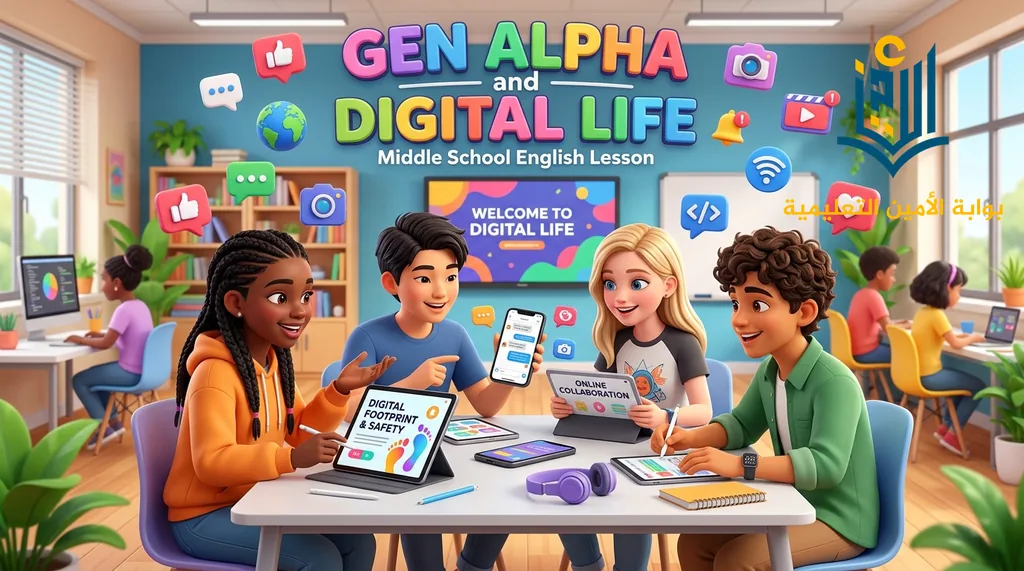
Meet Generation Alpha: Growing Up in the Hyper-Connected 21st Century
Generation Alpha—encompassing young individuals born from 2010 to the mid-2020s—is the first demographic cohort raised entirely in the twenty-first century surrounded by ubiquitously integrated digital technology. Unlike preceding generations who witnessed the gradual advent of smartphones and cloud computing, Generation Alpha members encountered artificial intelligence, voice assistants, and interactive touchscreens from early infancy. This immersive exposure fundamentally shapes their communication patterns, recreational habits, and learning methodologies. However, navigating daily screen time while cultivating meaningful offline relationships and rigorous physical fitness presents crucial modern challenges. In this foundational lesson, we explore the social and educational characteristics defining Generation Alpha, contrasting the Present Simple and Past Simple with initial applications of the Present Perfect tense to trace how technological advances have revolutionized adolescent daily routines.
1. Contextual Reading: A Day in Layla's Connected World
Thirteen-year-old Layla was born in 2012, placing her squarely in the heart of Generation Alpha. When Layla wakes up on a school morning, she does not search for paper timetables or traditional radio broadcasts. Instead, a smart ambient display gently illuminates her room, synchronizing her daily schedule directly from her school's interactive learning portal. "Digital devices have been part of my life since I was a toddler," Layla reflects. "Yet, my teachers constantly remind us that technology is an empowering instrument for inquiry, not a substitute for critical thought or human empathy."
During her school day, Layla collaborates with classmates on a renewable energy simulation using cloud-based tablets. In the computer lab, she writes elementary Python scripts to control automated irrigation models. Later in the evening, rather than spending limitless hours scrolling passively through video streams, Layla adheres to a strict family screen-time agreement. She intentionally switches her tablet to 'Do Not Disturb' mode at 8:00 PM, devoting time to reading physical books, practicing badminton, and conversing with her family.
Core Pedagogical Takeaway
Generation Alpha learners thrive when technological proficiency is balanced with disciplined time management, physical vitality, and active community engagement.
2. Generational Terminology and Digital Collocations
In authentic academic English, technology terms combine predictably with specific verbs and prepositions. Developing fluency requires mastering these natural collocations:
| Collocation | Syntactic Pattern | Exemplary Communicative Context |
|---|---|---|
| digital native | Adjective + Noun | As digital natives, Generation Alpha children navigate touch interfaces intuitively. |
| manage screen time | Verb + Compound Noun | Adolescents must manage screen time effectively to avoid ocular fatigue and insomnia. |
| digital footprint | Adjective + Noun | Every web search, upload, and comment contributes permanently to your digital footprint. |
| unplug from devices | Verb + Preposition + Noun | Our family unplugs from electronic gadgets during weekend outdoor excursions. |
| attention span | Noun + Noun | Bite-sized micro-videos can shorten attention spans if students do not practice deep reading. |
| interactive simulation | Adjective + Noun | Science teachers utilize interactive simulations to visualize molecular structures safely. |
3. Syntactic Foundations: Past Simple vs. Present Simple vs. Present Perfect
Expressing chronological events accurately requires distinguishing between completed past actions, ongoing general routines, and actions linking the past with the present:
Past Simple
Used for actions completed at a definite, stated time in the past.
- Steve Jobs introduced the first tablet computer in 2010.
- Signal markers: yesterday, in 2015, two years ago, last week.
Present Simple
Used for habitual routines, universal truths, and general facts.
- Layla checks her homework schedule every morning.
- Signal markers: always, usually, regularly, every day.
Present Perfect
Used for actions starting in the past with current relevance or unspecified time.
- Artificial intelligence has revolutionized school curricula recently.
- Signal markers: already, yet, just, since, for, ever.
Practical Application & Language Workshop
Activity 1: Analytical Textual Comprehension
Explain why Generation Alpha is referred to as the first true group of 'digital natives', and summarize the strategy Layla employs to maintain equilibrium between technology and offline wellness.
Activity 2: Grammatical Aspect Discrimination
Identify and correct the tense error: "In 2010, researchers have defined Generation Alpha as children born after the launch of modern tablet computers."
Tap any card to reveal its meaning, or tap the audio icon to listen:
Click on an option to check your answer and view the detailed explanation: