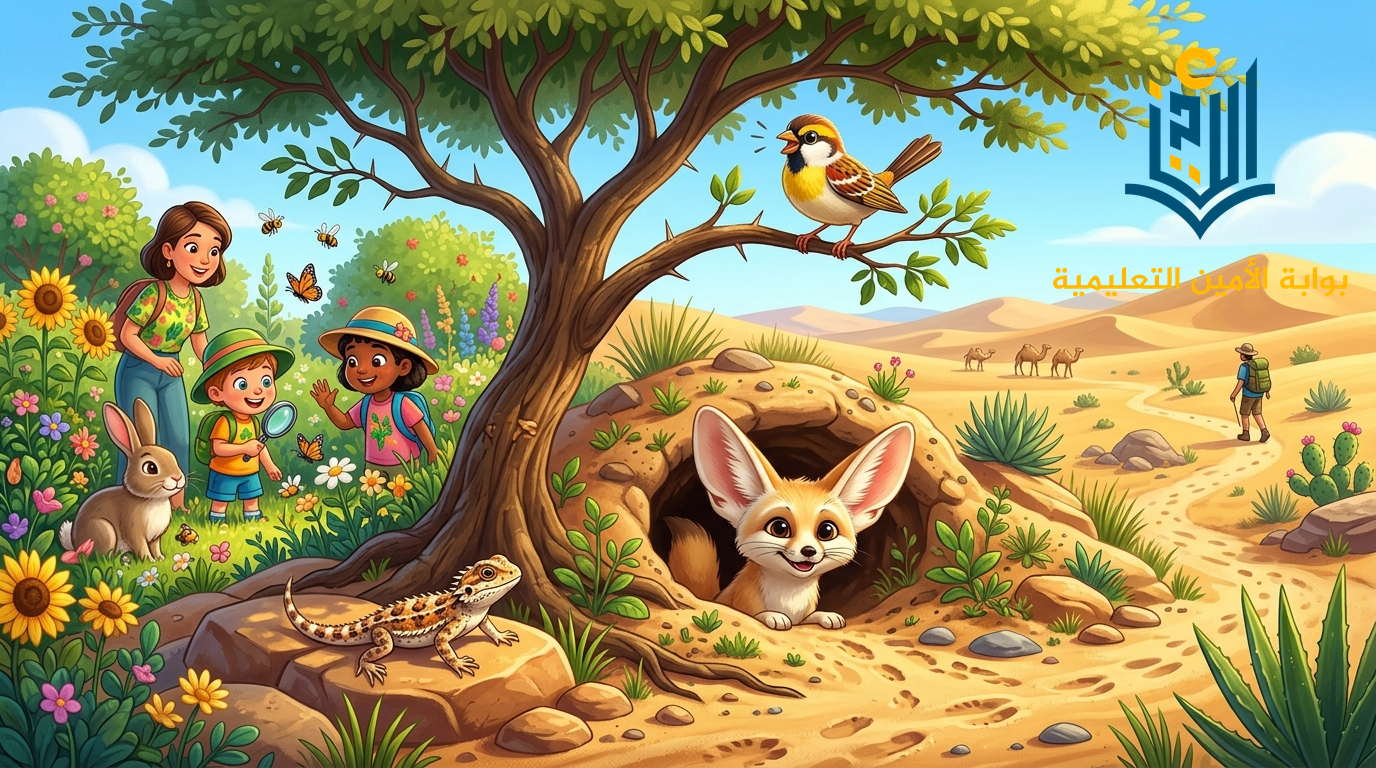
Lesson 1: Let's Find Living Organisms
Welcome to the amazing world of living organisms! Discover how humans, animals, and plants differ from non-living things, explore their natural habitats, and learn how amazing creatures like sparrows, lizards, and the desert fennec fox adapt to thrive in nature.
When you look at nature all around you—in gardens, schoolyards, and deserts—you will find two main groups:
A. Living Organisms (الكائنات الحية)
Everything that can feed, grow, and breathe.
B. Non-Living Things (الأشياء غير الحية)
Things that do NOT breathe, eat, or grow by themselves.
Key Characteristics of Living Organisms:
Living organisms share three essential life characteristics:
Definition of Habitat (تعريف الموطن):
Habitat is the place where a living organism lives and finds all its essential needs: Food, Water, and Shelter (Safe place to live).
Where can we find living organisms around us?
1. Near Grass or Trees (قرب الأعشاب والأشجار)
- Why? These places provide plenty of food and are easy to hide in.
- Examples: Sparrows (العصافير) and Grasshoppers (الجراد).
2. Under Stones & in Shade of Rocks (تحت الأحجار)
- Why? These are damp places that retain water and are cool places away from the hot Sun.
- Examples: Ants (النمل) and Lizards (السحالي).
Amazing Animal Spotlight: The Fennec Fox (ثعلب الفنك)
How does the Fennec Fox survive the blazing desert heat? It lives in burrows under the ground and stays in the shade of rocks during the daytime to escape the scorching heat of the Sun!
To discover where living organisms live like a real scientist, follow these three scientific steps in order:
1. Guess (Predict) - التخمين
Predict places where organisms might hide (flower beds, tree roots, gaps between rocks).
2. Search - البحث والاستكشاف
Go outside quietly and observe the living organisms in their environment without touching them.
3. Record - التسجيل والتوثيق
Write down the organism's name and describe the place where you found it.
Field Guide Table (دليل الملاحظة الميداني):
| Living Organism (الكائن الحي) | Habitat / Where to Find It (مكان التواجد) |
|---|---|
| 🐦 Sparrow (عصفور) | On trees and in bushes near food sources. |
| 🕷️ Spider (عنكبوت) | In flower beds and narrow gaps between rocks. |
| 🦎 Lizard (سحلية) | Under the shade of rocks, under stones, or on warm rocks. |
| 🦂 Scorpion (عقرب) | Hidden under stones and cracks between rocks. |
| 🪲 Dung Beetle (خنفساء الروث) | Deserts and farmlands near the fertile Nile River. |
Master these essential English science terms with their Arabic meanings:
Choose the correct answer for each question, then click Check Answers to see your score and explanations:
التعليقات والمناقشة