القائمة الرئيسية

Unit 1 - Lesson 1: Life Along the Nile

An interactive English lesson covering Nile ecosystem vocabulary, listening dialogues, food chain simulator, and quiz practice.

100 مشاهدة آخر تحديث: 31 أكتوبر 2026
Unit 1 - Lesson 1: Life Along the Nile
نص القراءة والحوار (Where Life Flows) المحطة 1 من 5
نص القراءة والحوار المقرر (Where Life Flows)

استمع إلى النطق الإنجليزي السليم للنص والحوار كاملًا أو لكل فقرة، أو اضغط على أي جملة باللون الأصفر للاستماع إليها مباشرة.

Unit 1: Food, Nature, and Culture — Lesson 1: Life Along the Nile (Where Life Flows)

النص والحوار الوزاري المقرر كما ورد في كتاب الوزارة للصف الخامس الابتدائي (صفحتا 8 و9)؛ مع الترجمة العربية التوضيحية لكل فقرة.

إظهار النص والحوارإخفاء النص والحوار
Reading Passage: Life Along The Nile (Activity 3, p. 8)
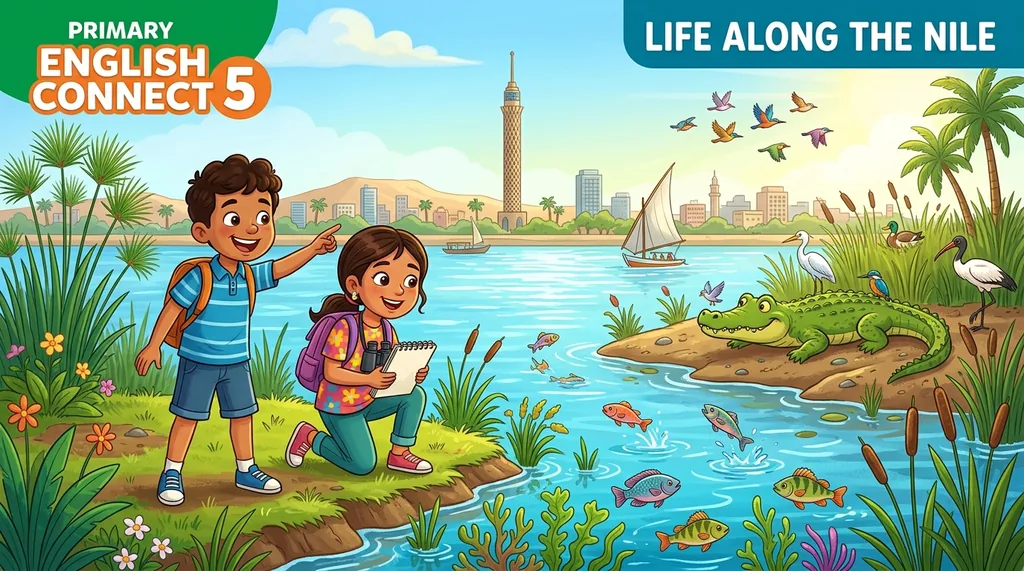
There are many rivers around the world. The Nile is one of the longest rivers in the world. It is home to many different animals. Crocodiles are strong and dangerous. They hunt large animals in or near the water. Small fish in the river eat water weeds. Birds eat insects, small fish, and plants near the river.

يوجد العديد من الأنهار حول العالم. يُعد نهر النيل واحدًا من أطول الأنهار في العالم، وهو موطن للعديد من الحيوانات المختلفة. التماسيح قوية وخطيرة، وهي تصطاد الحيوانات الكبيرة في الماء أو بالقرب منه. تأكل الأسماك الصغيرة في النهر الأعشاب المائية، بينما تأكل الطيور الحشرات والأسماك الصغيرة والنباتات بالقرب من النهر.

Dialogue Introduction — Where Life Flows (Activity 4, p. 9)
Ahmed and Laila are talking about life in the Nile River.

أحمد وليلى يتحدثان عن الحياة في نهر النيل.

Ahmed & Laila — Part 1: Small Fish & Water Weeds
Ahmed: Look at the small fish in the Nile River! They are so colorful. Laila: Yes! Do you know that small fish eat plants in the water? These are called water weeds.

أحمد: انظري إلى الأسماك الصغيرة في نهر النيل! إنها زاهية الألوان جدًا. ليلى: نعم! هل تعلم أن الأسماك الصغيرة تأكل النباتات الموجودة في الماء؟ وتُسمى هذه بالأعشاب المائية.

Ahmed & Laila — Part 2: Birds & Big Fish
Ahmed: That’s interesting! What about birds—what do they eat? Laila: Birds eat small fish, insects, and even plants near the river. Ahmed: Wow! What about big fish? Laila: They eat smaller fish, insects, and tiny creatures in the water.

أحمد: هذا ممتع! وماذا عن الطيور — ماذا تأكل؟ ليلى: تأكل الطيور الأسماك الصغيرة والحشرات وحتى النباتات القريبة من النهر. أحمد: رائع! وماذا عن الأسماك الكبيرة؟ ليلى: إنها تأكل الأسماك الأصغر حجمًا، والحشرات، والمخلوقات الدقيقة جدًا في الماء.

Ahmed & Laila — Part 3: Crocodiles, Kings of the Nile
Ahmed: And crocodiles—what do they eat? Laila: They eat fish, birds, and sometimes larger animals that come near the water. Ahmed: Huge crocodiles are scary! Do any animals hunt them? Laila: Not really—they are the kings of the Nile!

أحمد: والتماسيح — ماذا تأكل؟ ليلى: إنها تأكل الأسماك والطيور، وأحيانًا الحيوانات الأكبر حجمًا التي تقترب من الماء. أحمد: التماسيح الضخمة مخيفة! هل تصطادها أي حيوانات؟ ليلى: ليس تمامًا — فهي ملوك النيل!

Ahmed & Laila — Part 4: Protecting the River
Ahmed: It's amazing how all animals in the river find food to survive. Laila: Each animal plays an important role—that’s why we must protect the river.

أحمد: من المدهش كيف تجد جميع الحيوانات في النهر طعامها لتبقى على قيد الحياة. ليلى: كل حيوان يقوم بدور مهم — ولهذا السبب يجب علينا أن نحمي النهر.
شرح الدرس: الحياة والسلسلة الغذائية في نهر النيل (Life Along the Nile)

يُعد نهر النيل (The Nile River) واحدًا من أطول أنهار العالم، وهو بيئة طبيعية متكاملة وموطن للعديد من الكائنات الحية (home to many different animals). تعتمد الكائنات الحية في النهر على بعضها في الغذاء للبقاء على قيد الحياة (find food to survive):

🔬 مستكشف كائنات نهر النيل والسلسلة الغذائية (Nile Food Chain Explorer)

اضغط على أي كائن حي في نهر النيل لتشاهد رسمه التوضيحي، وغذاءه (What it eats)، ومن يتغذى عليه، ودوره البيئي، وأثر تلوث النهر عليه، مع الاستماع للنطق الإنجليزي:

Water Weeds (Plants in the Water)
الأعشاب والنباتات المائية في نهر النيل
Small fish eat plants in the water. These are called water weeds.
تأكل الأسماك الصغيرة النباتات الموجودة في الماء، وتُسمى الأعشاب المائية.
🍽️ الغذاء ومصدر الطاقة (What it needs / eats):
تنمو داخل مياه النيل العذبة بفضل ضوء الشمس والماء (Grow in fresh river water).
🔄 من يتغذى عليها؟ (Who eats it?):
تأكلها الأسماك الصغيرة الملونة (Small fish) وطيور النهر (Birds).
🌿 الدور البيئي في النيل (Role in the River):
هي القاعدة الأساسية للسلسلة الغذائية؛ توفر الغذاء والمأوى للأسماك الصغيرة والكائنات الدقيقة.
⚠️ ماذا يحدث إذا تلوث النيل؟ (If the Nile is harmed):
تذبل الأعشاب المائية وتموت، فلا تجد الأسماك الصغيرة طعامها لتبقى على قيد الحياة (cannot find food to survive).
موقع الكائن في مسار الغذاء بالنهر (Nile Food Chain Path):
Water Weeds ➔ Insects ➔ Small Fish ➔ Big Fish & Birds ➔ Crocodiles

التراكيب اللغوية وتصريفات الأفعال في الدرس (Language Focus & Verbs)

1. is home to + (animals / plants)
تُستخدم للتعبير عن أن المكان موطن طبيعي لكائنات حية متنوعة.
The Nile is home to many different animals.
2. What about + (noun)...?
أسلوب حواري للسؤال عن شيء جديد ومواصلة الحديث («وماذا عن...؟»).
What about birds—what do they eat? / What about big fish?
3. play an important role
يقوم بدور مهم؛ للتأكيد على أهمية كل كائن حي في النظام البيئي.
Each animal plays an important role in the Nile.
4. must + infinitive (base verb)
نستخدم must متبوعة بالفعل في المصدر للتعبير عن الضرورة والواجب لحماية النهر.
That’s why we must protect the river.

جدول تصريفات الأفعال الأساسية في الدرس (Regular & Irregular Verbs):

1. الأفعال المنتظمة (Regular Verbs: +ed / +d)
hunt ➔ hunted
يصطاد ➔ اصطاد
survive ➔ survived
ينجو / يبقى حيًا ➔ نجا
protect ➔ protected
يحمي ➔ حمى
flow ➔ flowed
يتدفق / يجري ➔ تدفق
affect ➔ affected
يؤثر (يضر) ➔ أثّر
2. الأفعال غير المنتظمة (Irregular Verbs)
eat ➔ ate
يأكل ➔ أكل
find ➔ found
يجد ➔ وجد
come ➔ came
يأتي / يقترب ➔ أتى / اقترب
know ➔ knew
يعرف ➔ عرف
keep ➔ kept
يحافظ على ➔ حافظ على

قاموس المفردات والتراكيب (Vocabulary & Expressions)

اضغط على أيقونة السماعة بجانب كل كلمة للاستماع إلى نطقها الإنجليزي الصحيح، وتعرف على معناها بالعربية ومثالها من نص الدرس.

water weeds
أعشاب مائية (نباتات تنمو في الماء)
Small fish in the river eat water weeds.
The Nile River
نهر النيل
The Nile River is one of the longest rivers in the world.
insects
حشرات (المفرد: insect)
Birds eat insects, small fish, and plants near the river.
hunt
يصطاد / يطارد فريسة
Crocodiles hunt large animals in or near the water.
crocodile
تمساح (الجمع: crocodiles)
Crocodiles are strong and dangerous reptiles.
colorful
ملوّن / زاهي الألوان
Look at the small fish in the Nile River! They are so colorful.
tiny
صغير جدًا / دقيق الحجم
Big fish eat smaller fish, insects, and tiny creatures in the water.
creatures
مخلوقات / كائنات حية (المفرد: creature)
Many different creatures live in the Nile River.
huge
ضخم جدًا / هائل الحجم
Huge crocodiles are scary!
scary
مخيف / مرعب
Crocodiles look scary because they have sharp teeth.
kings of the Nile
ملوك النيل (لقب التماسيح في قمة السلسلة)
No animals hunt huge crocodiles; they are the kings of the Nile.
survive
يبقى على قيد الحياة / ينجو
All animals in the river find food to survive.
play an important role
يقوم بدور مهم
Each animal plays an important role in the river.
protect
يحمي / يحافظ على
Each animal is important, so we must protect the river.
dangerous
خطير
Crocodiles are strong and dangerous.
home to
موطن لـ / مأوى لـ
The Nile River is home to many different animals.
flow
يتدفق / يجري (الماء في النهر)
Life grows everywhere where the Nile water flows.
harm
يؤذي / يضرّ بالبيئة
We must never harm the Nile River or throw trash in it.

أسئلة الفهم والاستيعاب والتفكير النقدي (Ministry Book Activities 1, 5 & 8, pp. 8–10)

فكّر في إجابة كل سؤال من أسئلة كتاب الوزارة أولًا، ثم اضغط على «إظهار الإجابة النموذجية» لمقارنة إجابتك بالإجابة الإنجليزية والعربية. هذه الأسئلة للمراجعة والتدريب ولا تدخل في حساب الدرجة.

1. What kinds of animals and plants live in the Nile River? (Activity 1 & 8, pp. 8 & 10)

إظهار الإجابة النموذجيةإخفاء الإجابة النموذجية
Many different organisms live in or near the Nile River, including water weeds, plants, insects, tiny creatures, colorful small fish, big fish, birds, and huge crocodiles.
الشرح بالعربية: يعيش في نهر النيل أو بالقرب منه العديد من الكائنات الحية المتنوعة، مثل الأعشاب المائية والنباتات والحشرات والمخلوقات الدقيقة والأسماك الصغيرة الملونة والأسماك الكبيرة والطيور والتماسيح الضخمة.

2. What do small fish in the Nile River look like, and what do they eat? (Activity 5, Q1, p. 9)

إظهار الإجابة النموذجيةإخفاء الإجابة النموذجية
Small fish are very colorful. They eat plants in the water called water weeds.
الشرح بالعربية: تتميز الأسماك الصغيرة بأنها زاهية الألوان (colorful)، وتتغذى على النباتات الموجودة في الماء التي تُسمى الأعشاب المائية (water weeds).

3. Which animals eat both plants and insects near the river? (Activity 5, Q3, p. 9)

إظهار الإجابة النموذجيةإخفاء الإجابة النموذجية
Birds eat small fish, insects, and even plants near the river.
الشرح بالعربية: الطيور (Birds) هي الكائنات التي تتغذى على النباتات والحشرات معًا بالإضافة إلى الأسماك الصغيرة بالقرب من النهر.

4. What do crocodiles eat, and why are they called the 'kings of the Nile'? (Activity 5, Q2 & Dialogue, p. 9)

إظهار الإجابة النموذجيةإخفاء الإجابة النموذجية
Crocodiles eat fish, birds, and sometimes larger animals that come near the water. They are called the kings of the Nile because they are strong and no other animals hunt them.
الشرح بالعربية: تأكل التماسيح الأسماك والطيور وأحيانًا الحيوانات الأكبر حجمًا التي تقترب من الماء، وتُلقب بـ «ملوك النيل» لأنها قوية ولا تصطادها الحيوانات الأخرى.

5. Why do we need to protect the Nile River? (Activity 5, Q4, p. 9)

إظهار الإجابة النموذجيةإخفاء الإجابة النموذجية
We must protect the Nile River because it is home to many different animals and each animal plays an important role in helping life continue.
الشرح بالعربية: يجب علينا حماية نهر النيل لأنه موطن لحيوانات عديدة ومختلفة، وكل حيوان فيها يقوم بدور مهم في التوازن البيئي.

6. If you were a small fish, what would be the hardest thing about living in the Nile, and how can people keep the river clean and safe? (Activity 8 & Think, p. 10)

إظهار الإجابة النموذجيةإخفاء الإجابة النموذجية
The hardest thing for a small fish is hiding from predators like big fish, birds, and crocodiles. People can keep the Nile clean and safe by not throwing trash or polluting the water so animals and humans are not harmed.
الشرح بالعربية: أصعب شيء يواجه السمكة الصغيرة هو الاختباء من المفترسات كالأسماك الكبيرة والطيور والتماسيح. ويمكن للناس الحفاظ على النيل نظيفًا وآمنًا بعدم إلقاء القمامة أو تلويث المياه حتى لا تتضرر الحيوانات والبشر.
اختبار الدرس بأسئلة متنوعة
أجب عن جميع الأسئلة الأربعة عشر؛ تدخل كلها في حساب نتيجتك ونقاطك.
النتيجة: 0 / 14
1What are the plants that grow inside the Nile water and feed small fish called?
2According to Ahmed in the dialogue, what do the small fish in the Nile River look like?
3Which animals eat small fish, insects, and plants near the river?
4What do big fish in the Nile River eat to survive?
5How does the reading text on page 8 describe crocodiles?
6Why does Laila call crocodiles 'the kings of the Nile'?
7Complete the sentence from Activity 3: 'The Nile is one of the ________ rivers in the world.'
8What do crocodiles eat in or near the Nile River?
9Why do all animals in the Nile River search for food every day?
10According to Laila at the end of the dialogue, why must we protect the Nile River?
11What does the verb 'hunt' mean in: 'Crocodiles hunt large animals near the water'?
12Which expression did Ahmed use to ask about another animal in the dialogue?
13Small fish in the Nile River eat water weeds.
14Crocodiles are hunted by many animals in the Nile River.

أكملت دراسة هذا الدرس؟

احفظ إنجازك الآن لإضافة 5 نقاط تميز إلى رصيدك وتسجيل الدرس في لوحة إحصائياتك!